Color, Unibody iPhones? Just Bring on the iPod Tablet!

Rumors of the new iPhone are making their way around the web (see Business Insider). They are good looking and would cause iPhone enthusiasts to wish they had them... but the color alone wouldn't cause people to upgrade: There is only one Apple rumor I care about (and I wrote about this in December): bring on the Apple Tablet.

Think about it:

Apple Tablet = Netbook + Amazon Kindle + App Store + iPod Touch

People are gobbling up netbooks for $400-$600 and the Amazon Kindle runs $359-$489... wouldn't a $500-$750 be a success? I would pre-order instantly.

ipod-tablet

ESPN Takes Over Homepage to Promote Taken

Yet another aggressive, interactive ad campaign that has taken over ESPN's homepage. It is perhaps the most aggressive campaign that ESPN has run... and they have run several rich media campaigns recently:

Last week, Apple took over ESPN.com to attack Microsoft's latest campaign. And two months ago, they shook up ESPN.com with a terrific iPhone ad. ESPN reminded us all that Valentines was approaching with a huge JC Penny takeover. ESPN promoted the Star Trek movie... back in late January.

Now, ESPN has used all available real estate other than the headline box (300 x 225) to promote the DVD release of Taken. I like integrated campaigns (in moderation). I like when ad units expand on interaction. But this, frankly, verges on being too much. The only saving grace is that you have to interact with either ad unit to turn the video unit on.

espn-take-over

David Ortiz on Facebook Shows Why Some Are Afraid of Social Media

Despite the big traffic and abilities to engage with consumers, some brands are still afraid of social media. Most grasp the power of social media (from blogging to widgets and from Facebook to Twitter), but many are still afraid of what user interactions can lead to.

On Twitter, those interactions are less scary because bad behaviors are often isolated and not tied to the brand itself. For instance, if Ashton Kutcher Twitters about his new movie, negative reactions are not directly connected to Ashton... in the world of blogging, it is akin to turning off your comments (activity can still occur - but not in your stream).

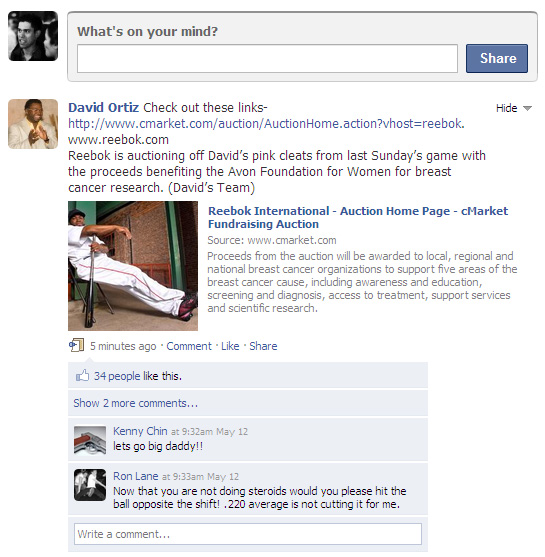
On Facebook, the commentary is directly associated... as David Ortiz and Reebok found out today. Ortiz used Facebook to promote his new auction supporting breast cancer. Within 5 minutes, he got the following reaction:

"Now that you are not doing steroids would you please hit the ball opposite the shift. .220 average is not cutting it for me."

It is unfortunate... but you wonder why fear still exists?

david-ortiz-facebook

Apple Takes Over Wall Street Journal with iLife Ad

A week after Apple took over ESPN.com to attack Microsoft's latest campaign... And two months after they shook up ESPN.com with a terrific iPhone ad.... And over a year after promoted Leopard on NYTimes.com...

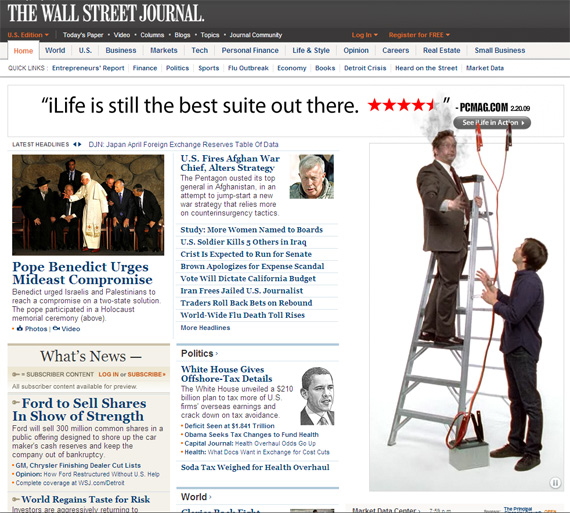
Apple released another terrific rich ad campaign - this time on the Wall Street Journal and promoting iLife. Apple seems to have mastered the interactive double ad-unit (horizontal and double-width leaderboard) where the two components interact with one another. The campaigns are integrated with other marketing efforts and encourage user engagement on the publisher's site... an win / win.

wsj-apple-ilife

Sirius XM Loses 400,000 Q1 Subscribers - Thanks iPhone / iPod!

For subscription services, one of the core business measurements is new / lost subscribers. Read the quarterly earnings transcripts for companies like Comcast and you will realize how much attention is paid to subscription and revenue per subscription metrics.

This week, Sirius XM (SIRI) reported very poor numbers and saw their stock fall from $0.54 to $0.42:

The satellite radio monopolist said it lost 400,000 net subscribers during Q1, finishing the quarter with 18.6 million subs.

Retail subscribers -- those who sign up for Sirius on their own, not by buying a new car -- were the biggest defectors, at 370,000 net sub losses, down from 49,000 net sub losses a year ago.

According to BusinessInsider.com, Sirius blamed their struggles on the auto industry. Certainly a weak auto market - and economy - will negatively impact Sirius XM...

But isn't the real issue that Sirius XM simply doesn't provide as much value as it used to? iPods and iPhones have effectively captured the majority of satellite radio's initial value: on-demand music and content. Now, between massive music libraries, podcasts, Pandora and countless other ways to access content you want - there really is no reason to pay a subscription price for Sirius.

In fact, the only reason to subscribe is if you are particularly drawn to specific personality (like Howard Stern).... and even that is eroding. For instance, XM used to have rights to all MLB games with MLB Home Plate. Now, for a one-time $9.99 fee, you can get an improved version for your iPhone or iPod Touch - complete with box scores, video and other customizations.

And that's just the content piece. Neither Sirius nor XM ever understood form factor and portabilitiy... and obviously Apple has mastered that. So while Sirius wants to blame Detroit and a struggling indsutry for their woes - they should really credit a technology company for beating them in both device and content.

Bit.ly Goes Mainstream: URLs Included in Magazines

Services and brands enter mainstream pop culture when they:1. Reach critical mass, and/or 2. Provide value in a way that makes their usage critical

Use Facebook and Twitter as examples. From print to television, both are now routinely included as informational sources and communications tools (for instance, CNN's in-show advertisements for their Twitter accounts and ESPN / Sportscenter's ticker promotion for their Twitter accounts). Then there are services that have great online popularity but are far too geeky (or perhaps irrelevant) to go mainstream... and thus reach offline popularity. Despite being the most popular URL shortener - Bit.ly remains an online utility that is essentially a tool usage on more popular sites like Facebook and Twitter.

Perhaps that is changing. The below image is from ESPN The Magazine and includes a reference to a bit.ly URL. It serves a purpose for ESPN: it is there to save space (and likely also not directly promote the website's brand).

But do most people know what to do with this? There isn't even an 'http://' before the 'bit.ly/blueroom' mention!

bitly-in-espn-the-mag

McDonalds McCafe Takes Over YouTube

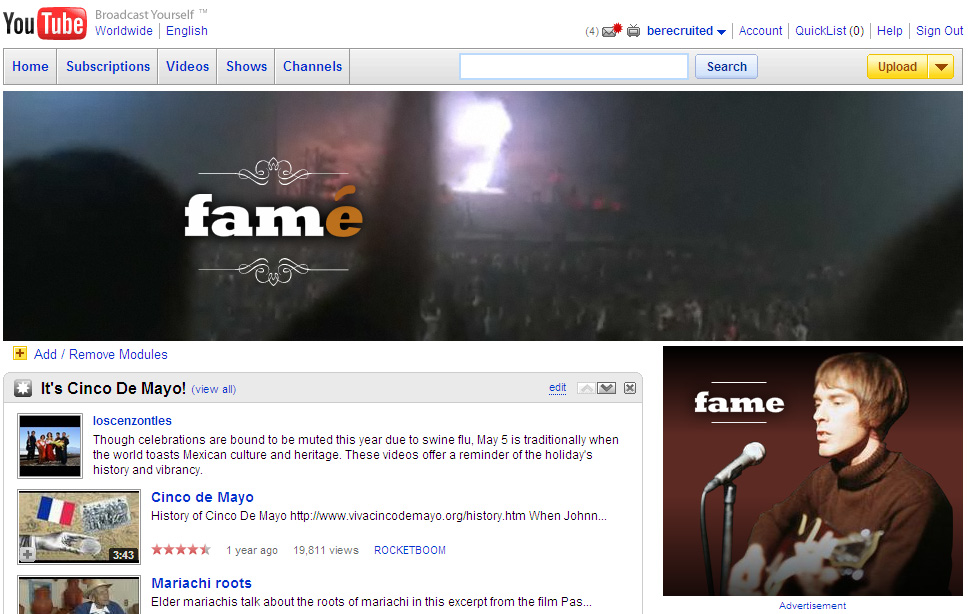
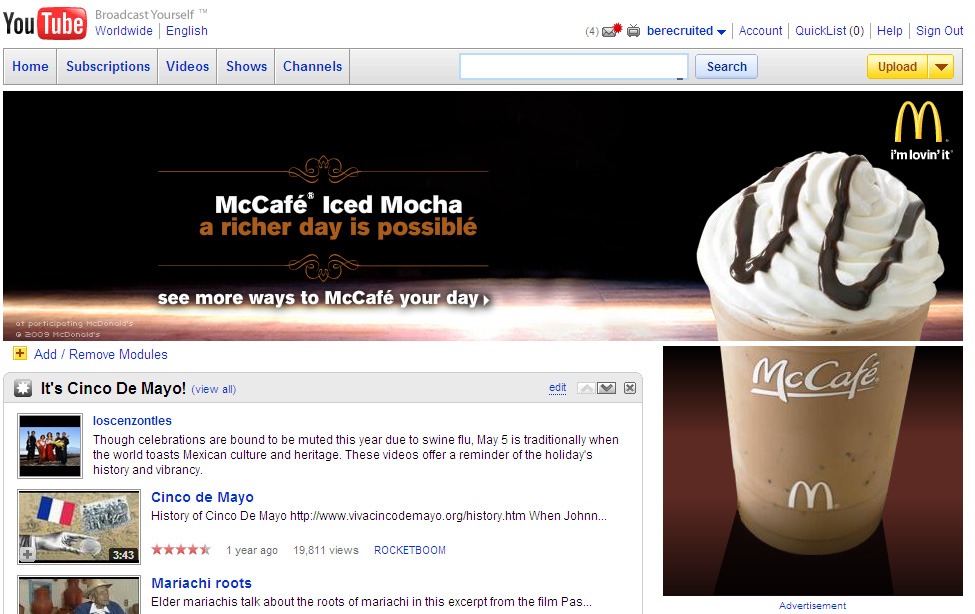
McDonalds has launched an advertising campaign alongside their new McCafe coffee line. You've likely seen the new McCafe spots during prime time television and today McDonalds overtook YouTube's homepage (see screenshots below). The campaign is interesting in itself - primarily because of the real estate and integrated components... and in a format that we have seen before.

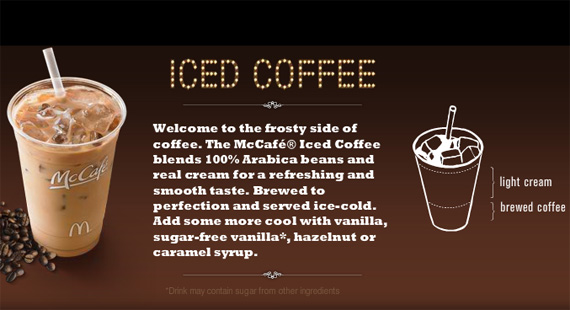
But the most interesting part is how McDonalds defines their iced coffee: based on the diagram it is about 90% "light cream" and 10% "brewed coffee". Is this actually considered a coffee drink? Did McDonalds diagram it incorrectly and reverse the ingredients? Whatever it is... it cannot be right:

mcdonalds-mccafe

McDonalds McCafe McDonalds McCafe

Facebook Drives 19% of Huffington Post's Traffic

When I last covered Perez Hilton, it was when he hit 14,000,000 pageviews in a single day - a remarkable feat considering big brands like Huffington Post had topped out at 7,700,000. An interesting outcome of the article came from Hitwise: Heather Hopkins noted that Facebook was Perez Hilton's #1 traffic referral (8.7% vs Google's 7.6%).

So I dug into Huffington Post's numbers to see what another major media site's traffic sources looked like. First off, HuffPo does about 200 million monthly pageviews and reaches about 13 million viewers:

Also worth noting: Huffington Post is nearly two years old. That may seem trivial, but it means that they have had plenty of time to build a good reputation with Google (and other search engines) and links across the web (blogs, media, etc)... and with two years of content, that suggests that SEO traffic should be higher for Huffington Post than the normal publisher.

Yet, according to Compete's "referring analytics", Huffington Post derives 18.6% of its traffic from Facebook. Wow:

HuffingtonPost.com "referring analytics": #1. Facebook 18.59% #2. Google 11.6% #3. Yahoo 5.16% #4. Digg 4.43% #5. NYTimes 2.5%

Huffington Post gets nearly 1/3rd of their traffic from two sources: one is algorithmic and one is social. And the fact that so much of their traffic comes from Facebook suggests that Huffington Post:

- creates great, viral content... interesting enough that its readers actively share it - benefits from breaking news (probably before major papers can) and/or controversial content

PlentyofFish's Bizarre Advertising Practices

Most advertisers will preach best practices like: - deliver a clear and concise message - keep it simple and precise - make it visual and grab the viewer's attention

By breaking most common advertising rules, PlentyofFish's ads actually caught my attention (enough so that I spent a few minutes creating the images, blogging it, etc).

The ad flips through two units:

1. My name is Markus and I created Plentyoffish.com; my site is completely free and we generate about 800,000 relationships a year. The majority of users are single professionals and users who are serious about meeting someone. Lots of text with lots of qualifiers. Just as you would find it off-putting if your date said "me, me, me" - the use of "my name" and "my site" is awkward.

2. If you are looking for someone you may as well join us; we have millions of people and best of all we're free! You aren't going to meet anyone trolling bars or supermarkets so... signup here.

My favorite part is the very strong call to action: "You may as well join us" [followed by a semicolon].

plenty-of-fish-ad